
How Coastal Women Claim Their Place in Kenya's Blue Economy
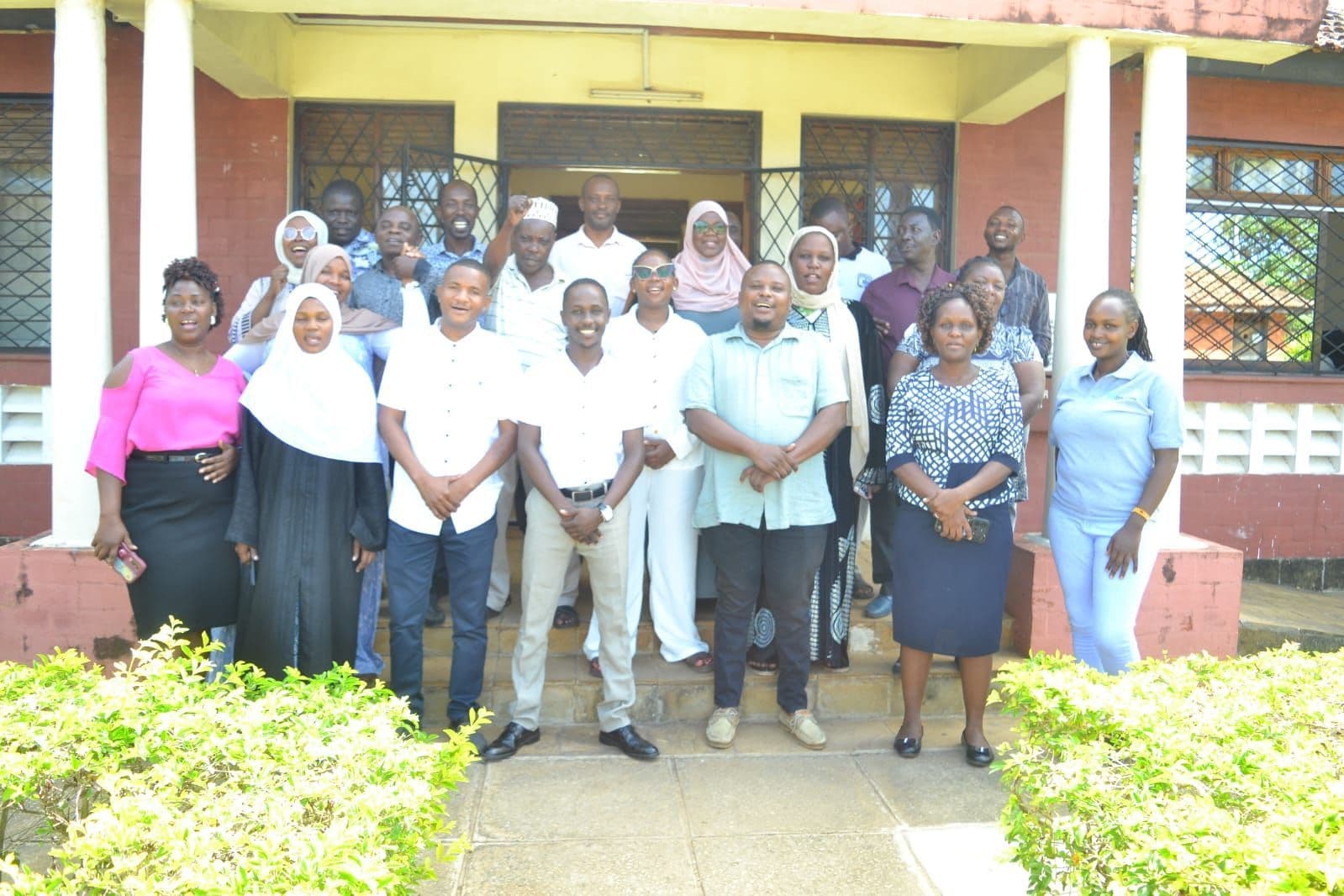
For many years, women in Kenya's coastal communities have made a major contribution to developing the Blue Economy, but they have largely remained excluded from decision‑making, asset ownership and high‑value opportunities that shape the sector.
However, that situation is now beginning to change in the counties of Kwale and Lamu, where a 42‑month program aims to move women from the margins of the coastal economy and empower them to fully participate in economic activities, leadership and decision‑making.
The project Enabling Gender-Responsive, Circular, and Sustainable Blue Economies for Kenya Coastal Communities, which started last year and is expected to run until December 2028, is funded by Canada through a United Nations joint programme involving UN Women, UNIDO, FAO and UNEP. Hand in Hand Eastern Africa implements the gender‑related component of the project.
Breaking barriers facing women
Preliminary results of a baseline study conducted in Kwale clearly show the challenges women face.
Many women do not formally own assets that could be used as collateral to obtain loans and expand their businesses.
While men dominate the main marine fishing activities that generate higher incomes, many women are confined to lower‑profit activities such as fish processing and sales.
Women also spend more than five hours a day on unpaid household chores, compared with roughly 1.5 hours for men. This further reduces the time they can devote to growing their businesses and participating in community leadership.
What is even more striking is that women are often invited to community meetings without being given a real opportunity to influence decisions.
Speaking at a capacity‑building workshop held in Red Cross Ukunda, Business Relations Officer at Hand in Hand Eastern Africa, Stephen Mutua, said the project aims to change that culture by addressing gender inequality at the family level, community structures and public institutions.
“First, we focus on integrating gender issues and policy reforms together with other stakeholders. When you ensure that laws and policies are fully implemented, it becomes easier to address gender issues,” Mutua said.
Gender integration brings men and women together to expand their businesses in the Blue Economy and build sustainable livelihoods.
Instead of treating women’s participation as a box‑checking requirement to complete the project, the program uses community‑driven approaches to give women and other marginalized groups a strong voice in decisions affecting their lives.
Providing communities with tools for change
Through Gender Action Learning System (GALS), communities are given practical tools such as vision planning and power diamonds to identify inequities, set goals and work towards greater economic empowerment.
The method of Right Way Forward (RWF) extends that strand to the community level by helping residents develop Community Action Plans and collaborate with leaders and relevant officials — from assistant chiefs to county directors and ministers — on issues affecting their communities.
In Mkwiro Island, those changes are already evident.
Influential community leaders helped revamp the primary school management board and ensure women are given key positions on that board.
The new board later mobilized community resources to pay teachers of the Parent-Teacher Association (PTA), a step that helped resolve a long‑standing challenge in school management.
There Chiromo, Lunga Lunga, advocacy meetings have encouraged men to voluntarily participate in household chores — a change that may seem small but can give women more time to engage in income‑generating activities.
For women, the significance of these changes goes beyond the hours they save.
It is about changing who participates, who is heard, and who gets a seat at the decision‑making table.
Women leaders in the fishing sector
Kwale County also aims to increase women's representation in Beach Management Units (BMUs), which play a crucial role in coastal fisheries management.
County Gender Officer, Nelly Amoite, said women involved in fishing must be given leadership positions instead of being left on the sidelines.
“We want women in the fishing sector to be integrated and serve as leaders on BMU committees so they can fully participate and contribute to decision‑making,” Amoite said.
She said her office will collaborate with Hand in Hand Eastern Africa to provide expertise and build the necessary capacity to ensure that participation is meaningful.
Emerging opportunities, such as wave farming, also give women new pathways into the Blue Economy.
However, inclusion advocates say economic opportunities should not be limited to women alone, but should also reach other groups that have long been excluded from development opportunities.
Inclusion must reach people with disabilities
Mwanaisha Said, Disability Officer and resident of Kinondo Valley, said persons with disabilities must be involved from the outset of development processes.
“Stakeholders must involve persons with special needs from the beginning as equal rights holders, not treat them as after‑thoughts,” she said.
The call highlights the importance of ensuring inclusive development does not provide assistance to marginalized groups only after decisions are made. Instead, those groups should have a voice in shaping the plans that affect them from the start.
Economic empowerment and family resilience
County Social Services and Talent Development Director, Samson Mangale Nyawa, said gender‑responsive economic development can strengthen the whole family while reducing social challenges.
“When a family depends on a man alone for income, problems arise. But when a woman contributes income to the family, the whole family moves forward,” Nyawa said.
He said creating opportunities for women, youth and persons with disabilities in areas such as wave farming can also help combat gender‑based violence by strengthening individuals’ economic capacity.
Nyawa added that the county supports policies involving various sectors, including the Business Fund Act, expected to provide funding to residents who want to grow their businesses.
From participation to decision‑making
For this project, the main goal is not to create more women‑owned businesses or increase the number of women attending community meetings.
It is to change how communities understand development, leadership and accountability.
Mutua said the Right Way Forward approach deliberately avoids politics to help communities understand that access to public services is their right as citizens, not a favor granted by political leaders.
“We are building community capacity to understand that public services and development are their civic rights as citizens, not political patronage,” Mutua said.
If sustained over the long term, the method could shift women’s role in the Blue Economy—from women primarily engaged in low‑value activities and attending meetings as a routine, to women owning assets, accessing finance, leading community institutions and having an influential voice in how coastal resources and opportunities are managed.
For Kwale and Lamu, those changes could mean that the future of the Blue Economy will not only grow the sector but also ensure that people who have long helped develop it can finally share in the power and prosperity it generates.
The End.