
Why Are Kenya’s October–December Rains Delayed Despite El Niño Forecasts?
Kenyan people continue to wonder about the delay of rain in some parts of the country, despite weather experts' forecasts indicating the possibility of rains exceeding the normal average in various areas during the short rainy season from October to December.
This situation has raised questions about when those rains will start falling heavily, especially in areas that have continued to experience sun and drought while other parts of the country receive rain.
However, weather experts explain that a delay in rain in some areas does not directly mean that the seasonal forecast has changed. They say the onset time of rain and its intensity can vary depending on the region and the atmospheric systems prevailing during that period.
According to a report published by The Kenya Times on October 22, 2026, some areas in western Kenya and the Coast had begun receiving rain, while other regions continued to face drought conditions.
How does the atmospheric system affect the start of rain?
Hannah Kimani, identified as the director of atmospheric forecasting services at the Kenya Meteorological Service Authority (KMSA), explained that a low-pressure system over the northern Indian Ocean temporarily affected the movement of the atmospheric system that contributes to bringing rain to the country.
That system is associated with the Tropical Convergence Zone of Wind Belts, known in English as Intertropical Convergence Zone (ITCZ).
The ITCZ is an area where wind belts converge, thereby helping to form clouds and cause rain. The southward movement of this zone is one of the key factors associated with the onset of the short rainy season in Kenya.
Changes in the movement of these systems can affect the timing when various regions begin to receive rain, as well as its distribution.
However, without recent atmospheric analysis data, it is impossible to confirm that a single system alone caused the rain delay in all affected areas.
Why doesn't El Niño guarantee rain everywhere?
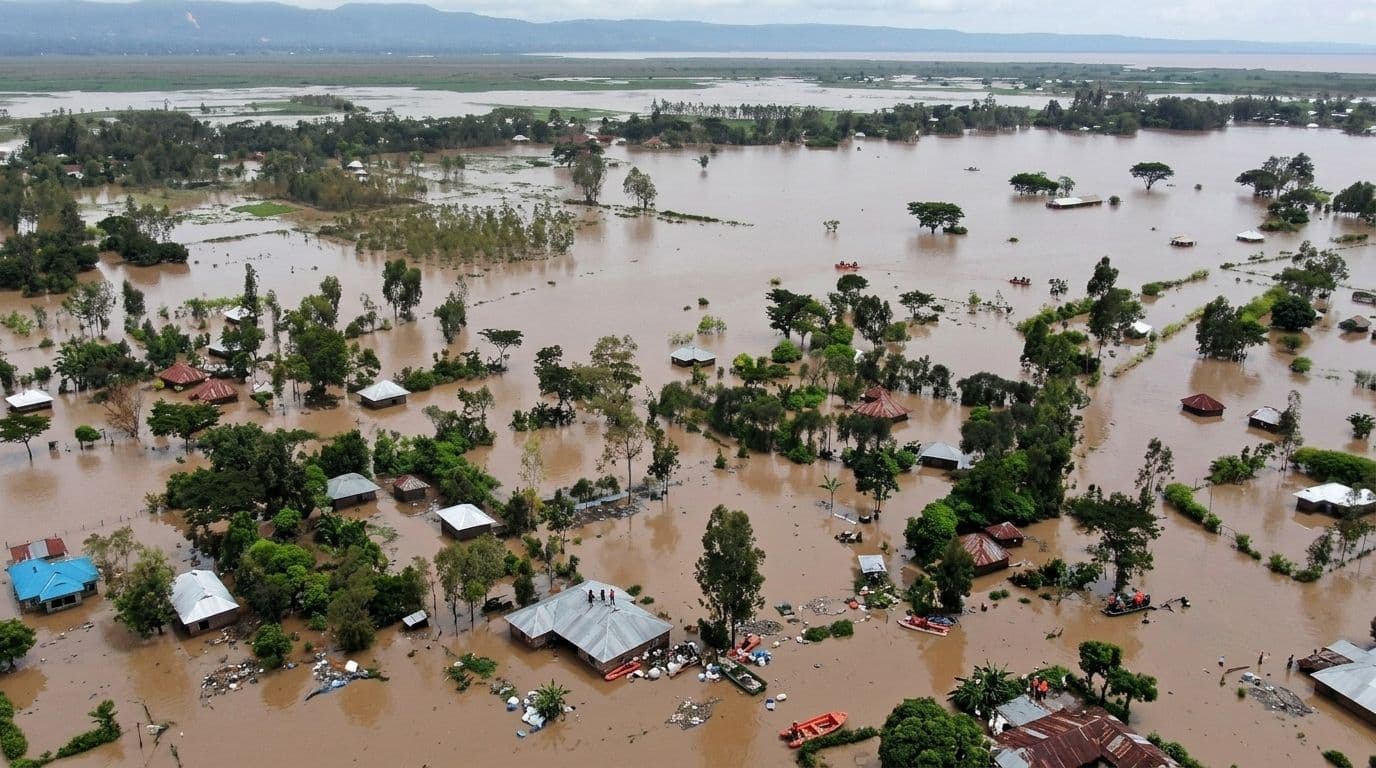
 Trans-Nzoia flood and rescue team, in collaboration with the Kenya Red Cross, helps a grandmother
El Niño is a phenomenon of sea surface temperature changes in the tropical regions of the Pacific Ocean. These changes can affect weather systems in various parts of the world, including East Africa.
During certain periods, El Niño is associated with an increased likelihood of rain in parts of East Africa. However, this does not mean that every area will receive heavy rain at the same time or in equal amounts.
Rain distribution also depends on other atmospheric systems, including Indian Ocean Dipole (IOD), which involves sea surface temperature differences between the western and eastern parts of the Indian Ocean.
These systems can influence the amount of moisture transported toward arid countries and the regions that will receive rain.
Therefore, the presence of El Niño alone is insufficient to accurately predict the exact date when rain will start in a specific area or the amount of rainfall that will occur.
What does the seasonal rain forecast say?
According to information provided in discussions with journalists involving weather experts from seven East African countries and the African Union, Kenyan weather experts emphasized that the October to December rain forecast still expected rains exceeding the normal average in many areas.
Jemimah Ongoma of Kenya's weather department said that those rains are still expected in many counties, although the start time may vary from one region to another.
Eunice Koech, a climate scientist at the IGAD Climate Prediction and Applications Centre (ICPAC), explained that a strong El Niño does not directly mean that every area will experience excessively heavy rain.
These differences highlight the importance of interpreting seasonal forecasts by considering specific regions rather than assuming uniform weather across the entire country.
It is important to distinguish seasonal forecasts from short-term forecasts: seasonal forecasts show the likely rain trend over a period, but they do not guarantee a specific start date of rain in each area.
WMO warns about the impacts of El Niño
The World Meteorological Organization (WMO), in a statement released on October 8, 2026, stated that El Niño was intensifying and could affect rain and temperature patterns in the coming months.
The impacts of these systems can vary across regions, with some experiencing increased rain and flood risk, while others face drought or extreme heat.
However, those impacts depend on regional conditions and other weather systems. Therefore, citizens are advised to consider forecasts specific to their areas rather than relying solely on general information about El Niño.
What should Kenyans do?
While experts continue to monitor atmospheric systems, farmers and the public are advised to keep following official updates from Kenya's Department of Meteorology to obtain forecasts and warnings relevant to their locations.
Farmers can use this information to plan agricultural activities, including planting times, taking into account crop types, soil conditions, and advice from agricultural officers in their areas.
Residents living in flood-prone areas should also follow official warnings and avoid dangerous zones during heavy rains.
Currently, there is no single date that can be definitively stated for heavy rains to begin across all parts of Kenya.
The key is to monitor new weather updates and recognize that a delay in rain in one area does not directly mean other regions will not receive the expected rainfall.