
MIGINGO: The Small Island That Became a Fishing Town and the Center of Kenya-Uganda Tension
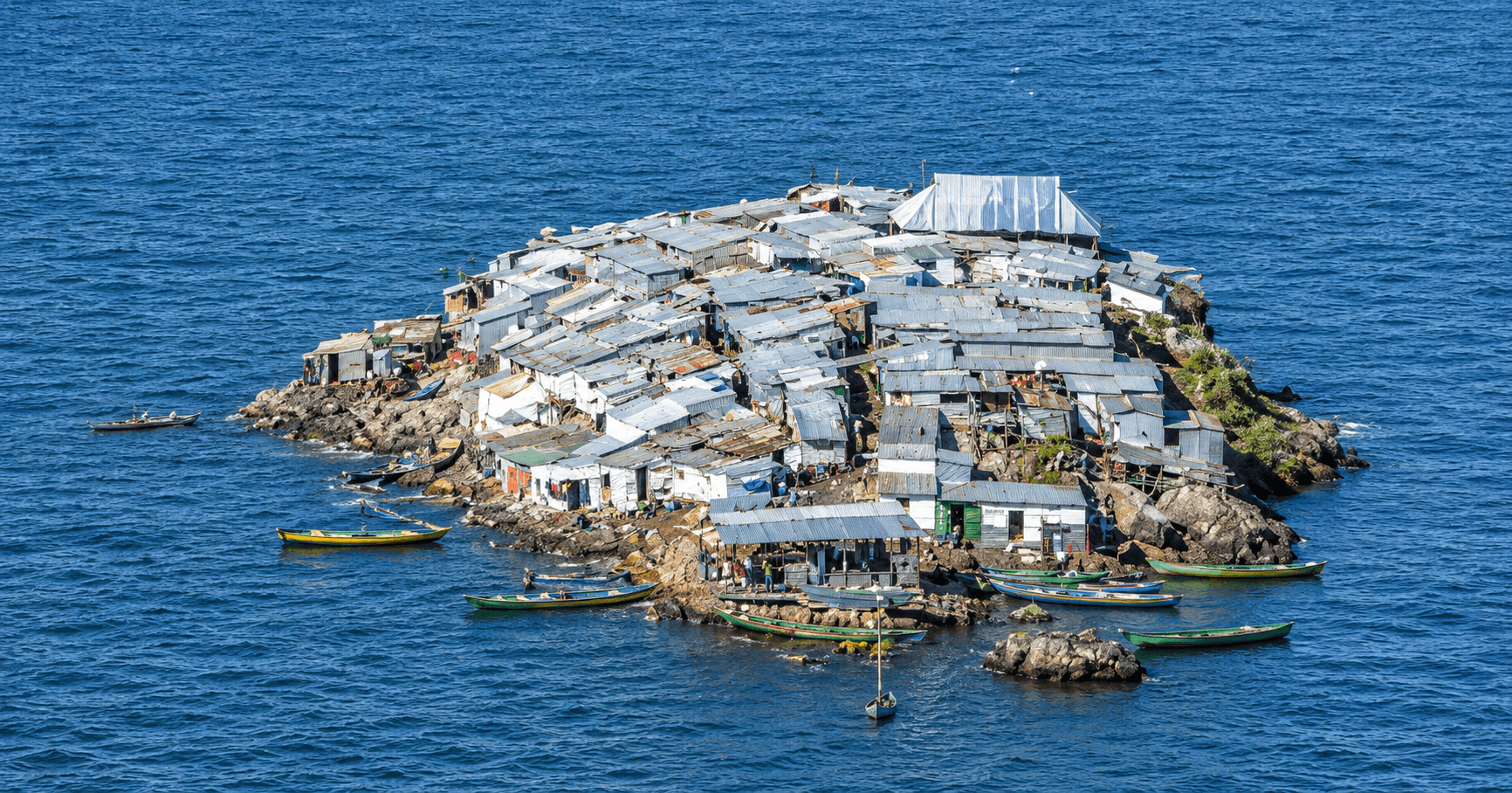
In the middle of Lake Victoria, the tiny island of Migingo has become a settlement of hundreds of people, a hub of fish trade, and a place that continues to attract attention due to ownership disputes between Kenya and Uganda.
In the waters of Lake Victoria, there is a small rock that is not even half the size of a football field, yet it supports the lives of hundreds of people. This is Migingo Island, an area known for its dense population, fishing activities, and a long‑standing border dispute between Kenya and Uganda.
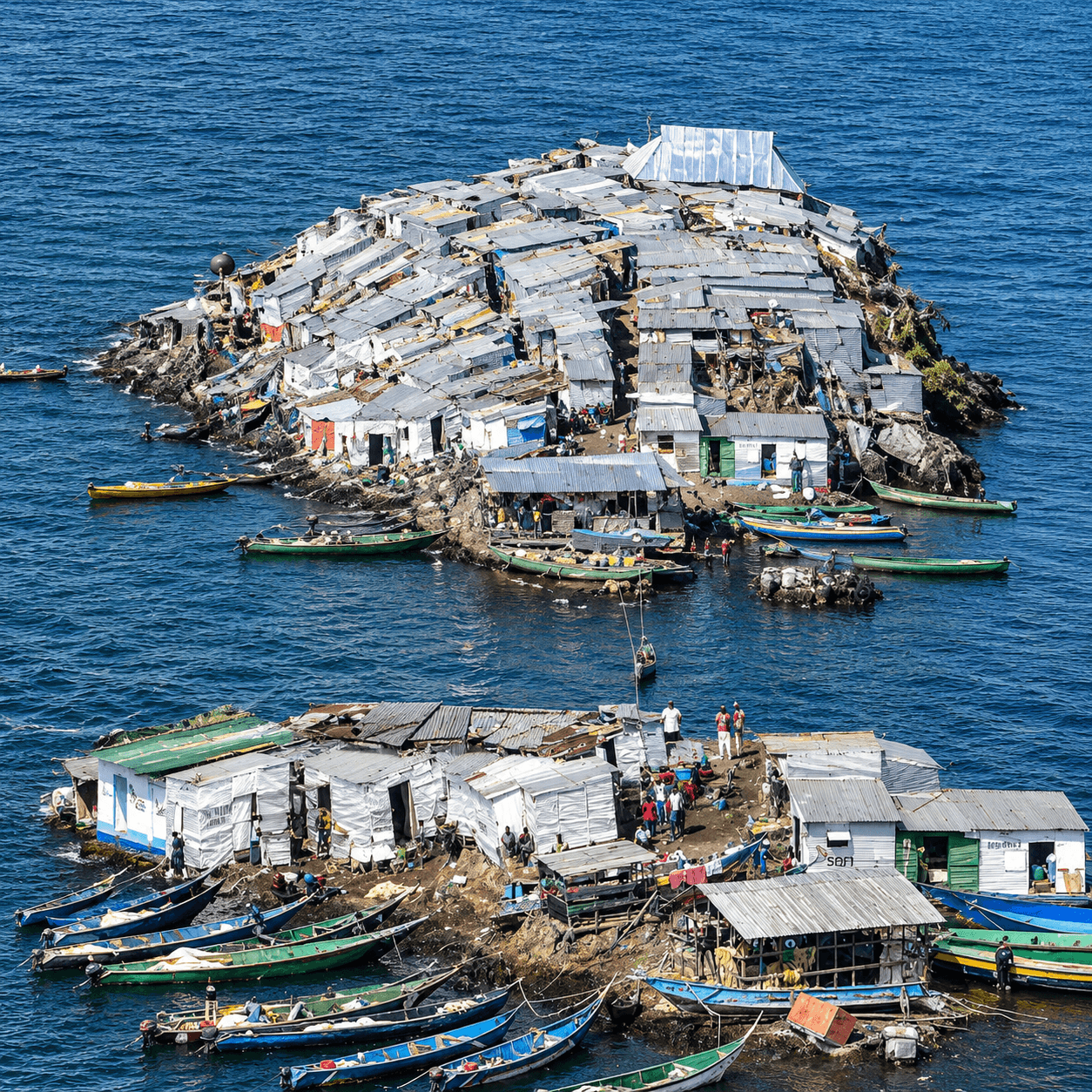
The island, estimated to cover less than 2,000 square meters, has more than 500 residents, according to cited statistics about its habitation. From a distance, Migingo looks like a cluster of corrugated iron sheets in the middle of the lake, while narrow shacks built close together cover most of the rock.
But what has made this tiny island become a home for hundreds of people and attract two nations?
Early settlement of Migingo
Before becoming a fishing hub, Migingo was an uninhabited rock, home to wildlife and snakes.
It is said that in 1991, two Kenyan fishermen, Dalmas Tembo and George Kibebe, arrived in the area looking for a good spot to fish. They cleared the wildlife and set up a small fishing camp.
That decision, aimed at seeking a livelihood, laid the foundation for the major changes that followed. As news about the abundance of fish in the waters surrounding the island spread, more fishermen began arriving from Kenya, Uganda, and Tanzania.
Fish turned the rock into a trade hub
Among Migingo's main attractions is the Nile perch. This fish has great value in domestic trade and international markets.
The presence of these fish attracted fishermen seeking income opportunities. The island began to transform from a small fishing camp into a settlement with many economic activities.
By 2004, the population started to grow rapidly. Corrugated iron shacks were built close together, and various businesses emerged to serve fishermen and residents.
Today, Migingo has small shops, food stalls, bars, and other enterprises related to the daily lives of its inhabitants.
Life on a densely populated island
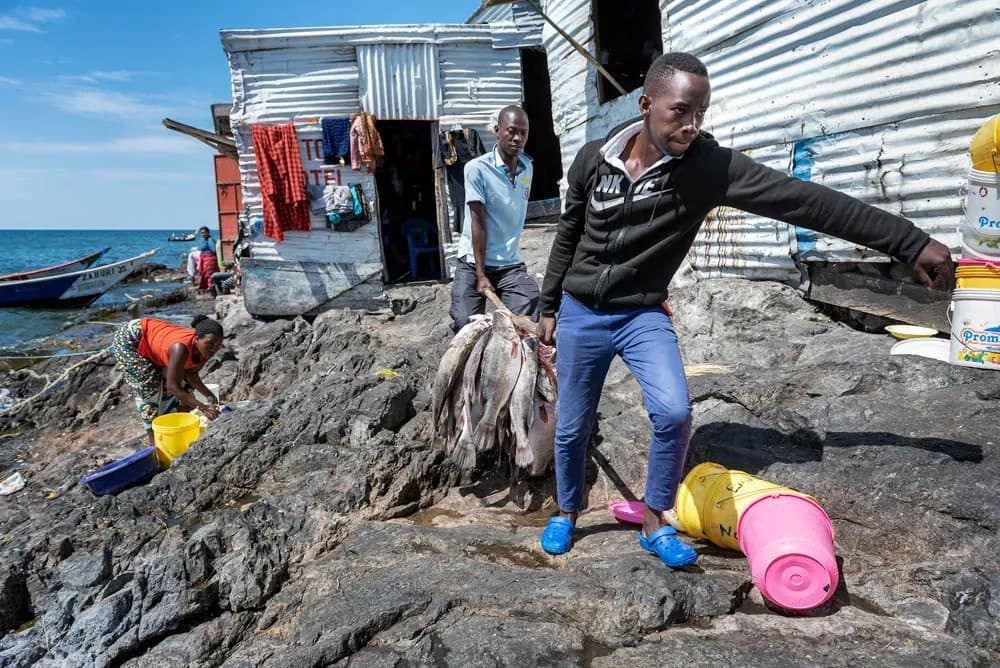
Life on Migingo is vastly different from that in other settlements. Space is limited, buildings are cramped and the pathways between shacks are narrow.
Essential services, including health and education, are challenging for residents living in such conditions. Because of the island's small size, expanding housing and building infrastructure is difficult.
Nevertheless, fishing activities remain the backbone of most residents' livelihoods. Fishermen go out onto the lake to catch fish, while traders buy and sell the harvested fish.
For many, Migingo is not just a place to live but also a source of income and hope for improving their lives.
Why do Kenya and Uganda dispute Migingo?
Despite its small size, Migingo has become a focal point of tension between Kenya and Uganda due to ownership claims and issues related to the management of fishing activities in Lake Victoria.
The dispute is linked to the economic importance of the area, especially because of the fish resources available in the surrounding waters.
For fishermen, border issues can affect their activities, while the authorities of the two countries are involved in negotiations over the management of the area.
This situation has made Migingo more than just a fishermen's settlement: it is an area of economic and diplomatic significance in Kenya‑Uganda relations.
From an uninhabited rock to a settlement of hundreds, the island has undergone major changes within a few decades.
Currently, life continues to revolve around fishing, trade, and the challenges of living in a cramped space. Over time, the ownership dispute continues to make the island a subject of public interest.